Windsurfing

Windsurfing is a surface water sport that is a combination of surfing and sailing.[1] It is also referred to as “sailboarding” and “boardsailing”, and emerged in the early 1970s from the surf culture scene of California. Windsurfing had gained a following across North America by the late 1970s[2][3][4] and had achieved global popularity by the 1980s.[5]

Windsurfing is predominately a recreational sport and is popular at flat water locations around the world, due to reasons of safety and accessibility.[6] The sport has two distinct interest groups, namely Racing and Riding, with many participants embracing both. Each discipline was influenced by yachting and surf culture respectively.

Racing includes long-board classes of Raceboard,[7] Windsurfer One Design,[8] and many other one design fleets, while short-board disciplines include the Formula class,[9] high speed slalom racing,[10] foil racing,[11] extreme speed sailing,[12] and ocean Marathon using high speed slalom equipment.[13][14][15][16] There are three major competitions in Racer windsurfing; these are the Olympic Games,[17][better source needed] the PWA Slalom Tour,[10][better source needed] and the Defi-Wind Gruissan. In Olympic windsurfing, competitors are on identical long-board equipment with a yachting regatta format, while PWA Slalom Tour competitors are at liberty to use unlimited amounts of high speed short-board equipment. The Defi-Wind Gruissan is the largest and most prestigious long-distance racing event in the world, and is held in France.[18][19]

Riding includes disciplines such as wave riding,[20] wave jumping, big wave riding,[20] freestyle[21] and big air and storm riding.[22] There are also three major competitions in Rider windsurfing; these are the PWA Wave Tour,[10] The IWT Wave Tour,[20] and the Aloha Classic.[23] These competitions are characterized by the use of unlimited equipment, with wave riding and jumping performances assessed by a panel of judges. Winning all three contests in one year is called the ‘Triple Crown’; the Triple Crown has never been attained.

Briefly about Professional windsurfing

One of the most popular and affordable for the average amateur is:
Slalom – speed race
Freestyle – performing tricks
Wave – riding on the waves

But we should remember that this sport is very dangerous, so you need to be careful.
Riccardo Campello is the only windsurfer that has approached the indicator of 2.5 turns. The Brazilian athlete is a multi-champion of this sport. But that’s not the pick if the athlete performs a triple somersault, as the sponsors promised to pay him $ 10,000 for better result.

An interesting fact is that the higher the professionalism, the smaller the volume of the board is. That is, an athlete who ventured to try his hand at windsurfing must necessarily be able to cope professionally with a small board that slides on the water.

The volume of the size is indicated in m3. The sail is indicated in the amount of its area (m2). The selection takes into account the strength of the wind and the rule – the stronger the wind, the smaller sail is . They are produced most often from polyester coated with Kevlar fabric.

Space exploration

Space exploration is the use of astronomy and space technology to explore outer space.[1] While the study of space is carried out mainly by astronomers with telescopes, its physical exploration though is conducted both by unmanned robotic space probes and human spaceflight.

While the observation of objects in space, known as astronomy, predates reliable recorded history, it was the development of large and relatively efficient rockets during the mid-twentieth century that allowed physical space exploration to become a reality. Common rationales for exploring space include advancing scientific research, national prestige, uniting different nations, ensuring the future survival of humanity, and developing military and strategic advantages against other countries.[2]

The early era of space exploration was driven by a “Space Race” between the Soviet Union and the United States. The launch of the first human-made object to orbit Earth, the Soviet Union’s Sputnik 1, on 4 October 1957, and the first Moon landing by the American Apollo 11 mission on 20 July 1969 are often taken as landmarks for this initial period. The Soviet space program achieved many of the first milestones, including the first living being in orbit in 1957, the first human spaceflight (Yuri Gagarin aboard Vostok 1) in 1961, the first spacewalk (by Alexei Leonov) on 18 March 1965, the first automatic landing on another celestial body in 1966, and the launch of the first space station (Salyut 1) in 1971. After the first 20 years of exploration, focus shifted from one-off flights to renewable hardware, such as the Space Shuttle program, and from competition to cooperation as with the International Space Station (ISS).

With the substantial completion of the ISS[3] following STS-133 in March 2011, plans for space exploration by the U.S. remain in flux. Constellation, a Bush Administration program for a return to the Moon by 2020[4] was judged inadequately funded and unrealistic by an expert review panel reporting in 2009.[5] The Obama Administration proposed a revision of Constellation in 2010 to focus on the development of the capability for crewed missions beyond low Earth orbit (LEO), envisioning extending the operation of the ISS beyond 2020, transferring the development of launch vehicles for human crews from NASA to the private sector, and developing technology to enable missions to beyond LEO, such as Earth–Moon L1, the Moon, Earth–Sun L2, near-Earth asteroids, and Phobos or Mars orbit.[6]

In the 2000s, the People’s Republic of China initiated a successful manned spaceflight program, while the European Union, Japan, and India have also planned future crewed space missions. China, Russia, Japan, and India have advocated crewed missions to the Moon during the 21st century, while the European Union has advocated manned missions to both the Moon and Mars during the 20th and 21st century.

Disney land

Disneyland Park, originally Disneyland, is the first of two theme parks built at the Disneyland Resort in Anaheim, California, opened on July 17, 1955. It is the only theme park designed and built to completion under the direct supervision of Walt Disney. It was originally the only attraction on the property; its official name was changed to Disneyland Park to distinguish it from the expanding complex in the 1990s. It was the first Disney theme park.Disneyland ParkThe park’s icon, Sleeping Beauty Castle, in 2019.SloganThe happiest place on earthLocationDisneyland Resort, 1313 Disneyland Dr, Anaheim, California, United StatesCoordinates33.81°N 117.92°WThemeFairy tales and Disney charactersOwnerDisney Parks, Experiences and Products
(The Walt Disney Company)Operated byDisneyland ResortOpenedJuly 17, 1955; 64 years ago[1]Previous namesDisneyland (1955–1998)Operating seasonYear-roundWebsiteOfficial websiteStatusOperating

Walt Disney came up with the concept of Disneyland after visiting various amusement parks with his daughters in the 1930s and 1940s. He initially envisioned building a tourist attraction adjacent to his studios in Burbank to entertain fans who wished to visit; however, he soon realized that the proposed site was too small. After hiring a consultant to help him determine an appropriate site for his project, Disney bought a 160-acre (65 ha) site near Anaheim in 1953. Construction began in 1954 and the park was unveiled during a special televised press event on the ABC Television Network on July 17, 1955.

Since its opening, Disneyland has undergone expansions and major renovations, including the addition of New Orleans Square in 1966, Bear Country (now Critter Country) in 1972, Mickey’s Toontown in 1993, and Star Wars: Galaxy’s Edge in 2019.[2] Opened in 2001, Disney California Adventure Park was built on the site of Disneyland’s original parking lot.

Disneyland has a larger cumulative attendance than any other theme park in the world, with 726 million visits since it opened (as of December 2018). In 2018, the park had approximately 18.6 million visits, making it the second most visited amusement park in the world that year, behind only Magic Kingdom, the very park it inspired.[3] According to a March 2005 Disney report, 65,700 jobs are supported by the Disneyland Resort, including about 20,000 direct Disney employees and 3,800 third-party employees (independent contractors or their employees).[4] Disney announced “Project Stardust” in 2019, which included major structural renovations to the park to account for higher attendance numbers.[5]

5 Meeting and Event Ideas Inspired by Walt Disney World

By Andrea Doyle -November 1, 2019  

Walt Disney World Creates Immersive Events
Art of Storytelling, a Walt Disney World focus
Wine Blending, Walt Disney World style
Walt Disney World enchants with Snow White themed parties
Hidden Mickeys, a Walt Disney World tradition
Shipwreck Beach at Walt Disney World

Walt Disney World Creates Immersive Events

Walt Disney World and Disney Meetings & Events creates immersive events with the artistry and creativity that has made the company a global brand and leader in entertainment. Disney knows how to develop programs that draw attendance and engages audiences. Show producers, writers, set designers, creative directors, entertainers, and actors are at the ready to help you deliver your message in whatever way works best for your company.

Art of Storytelling, a Walt Disney World focus

The Art of Storytelling at Walt Disney World

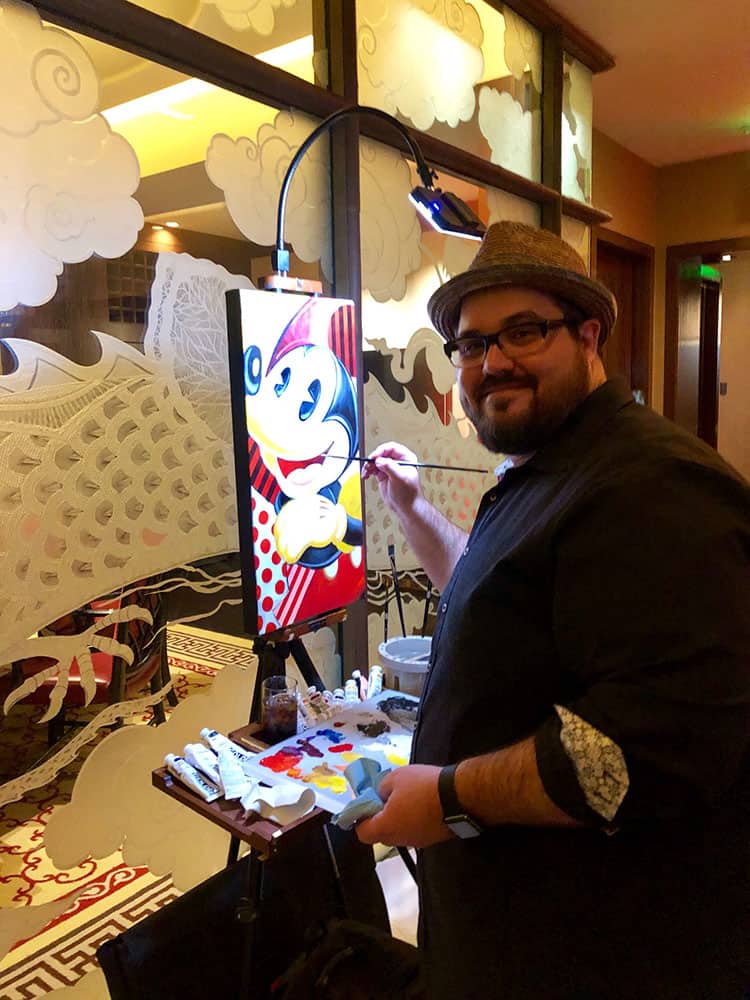
During a Walt Disney World reception that was part of IMEX this September, concept paintings were created by an artist during the event as guests looked on. In addition, an Imagineer mingled amongst the crowd, teaching about his craft. The creative process behind storytelling was highlighted, a process that can be applied to successful meetings and events. During the event, Walt Disney’s quote came to life, “I would rather entertain and hope that people learned something than educate people and hope they were entertained.”Wine Blending, Walt Disney World style

Wine Blending

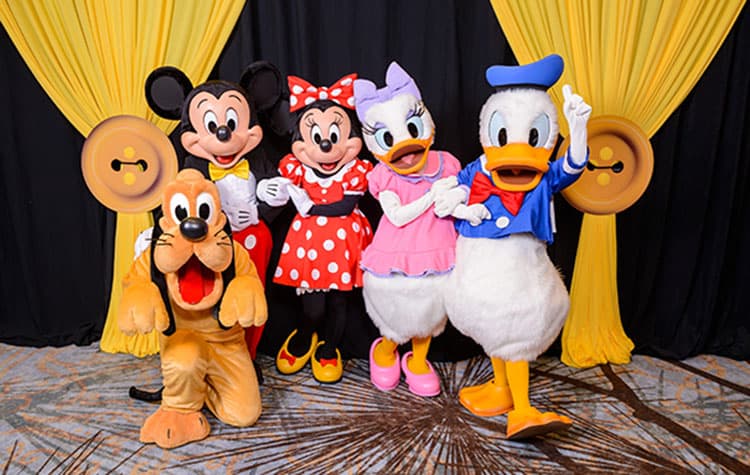
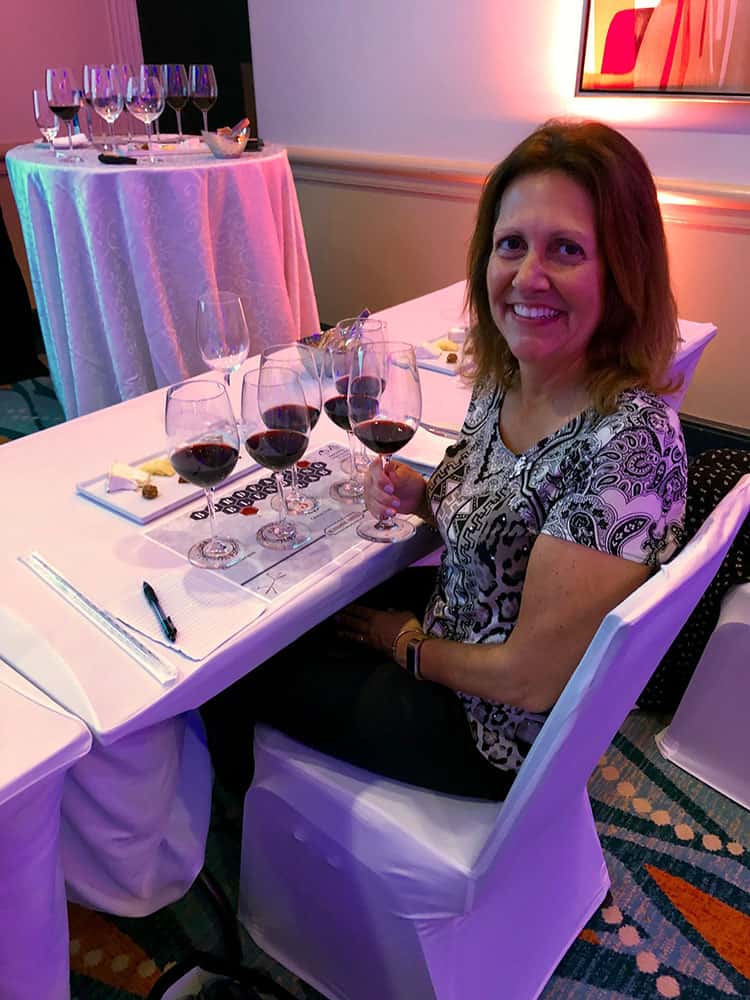
Not only are the meeting facilities at Walt Disney World Swan and Dolphin extensive, but so are the experiences it offers groups. I recently got to experience a wine blending experience during a trip sponsored by Marriott’s Convention & Resort Network, led by Luciano Sperduto, director of food and beverage and a certified sommelier, and Kristian LaPlante, assistant director of food and beverage that was not only fun but enlightening. They led us on a hysterical step-by-step look at the winemaking process. It was then time to taste reds, including Merlot, Cabernet Sauvignon, Petit Verdot, and Malbec, and blend our own Meritage. Each red was paired with amazing cheese like brie and goat’s cheese. With only the magic Disney can provide, our wine journey started with a private photo session with Mickey. The Swan and Dolphin, part of the Marriott Convention & Resort Network, can plan similar events for group functions.Walt Disney World enchants with Snow White themed parties

Snow White’s Enchanted Forest

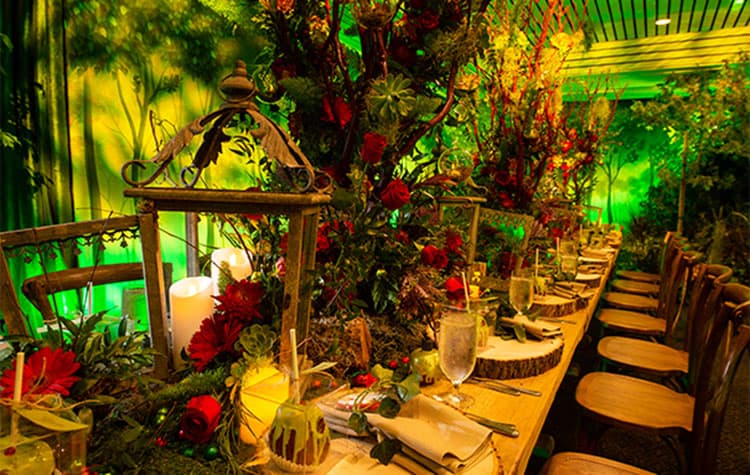
Your event will be the fairest of them all when you incorporate themed décor straight out of one of the most beloved fairytales. One recent group chose a King’s table for their seating arrangement, perfect for groups to mingle and network. Lanterns with glowing candles and red and green florals were arranged down the center of the table to create a larger-than-life storybook experience. Faux tree trunks at each place setting gave the feeling of dining in an enchanted forest.Hidden Mickeys, a Walt Disney World tradition

Mickey’s Surprise Party

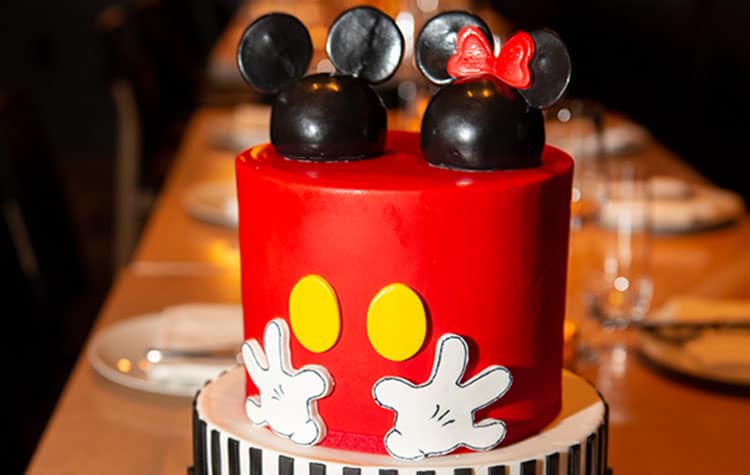
There is no better time to dedicate an event to Mickey Mouse than this year, his 90th birthday.

It’s all in the details, from the red, yellow, and black linens, to the Mickey Mouse balloons and floral arrangements. Planners can even provide a moment of “surprise and delight” with Mickey Mouse Ear Hats embroidered with each guest’s name placed at their table settings.

The culinary team can help create a festive menu with “Hidden Mickeys” incorporated into every dish and dessert.Shipwreck Beach at Walt Disney World

Shipwreck Beach

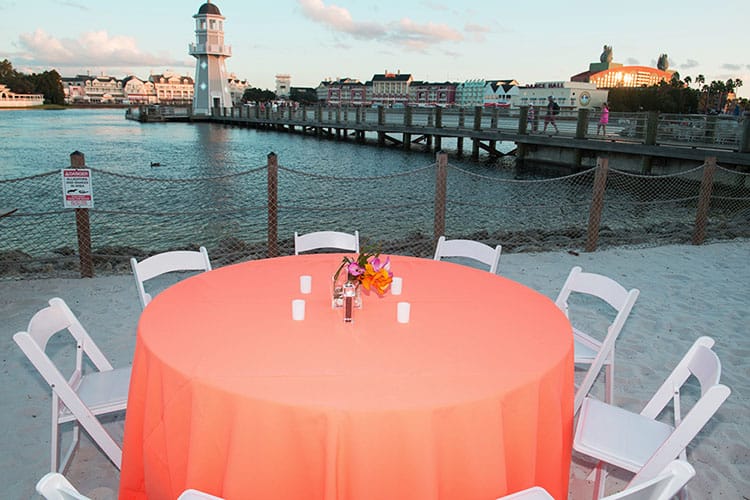
One of the things Disney does best is transformation. Disney’s Yacht & Beach Club Resorts has Shipwreck Beach that transports groups to a white sand beach with views of a New England-style lighthouse. It is the ideal setting for interactive games like cornhole as well to spark networking amongst attendees.